
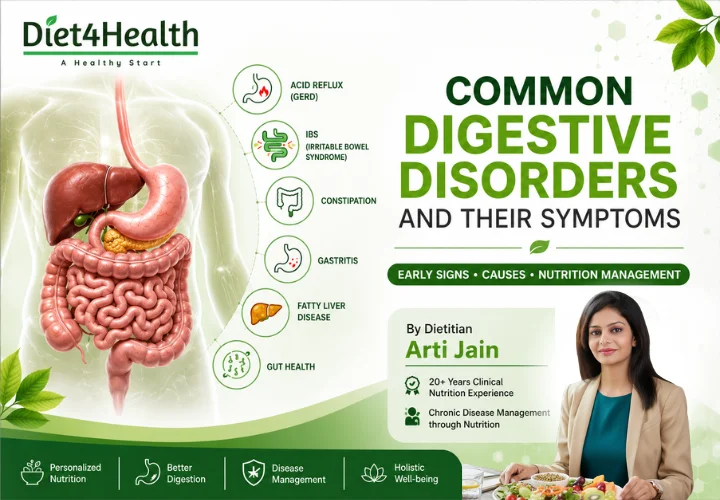
Digestive health plays a vital role in overall wellness. Unfortunately, many people ignore symptoms like bloating, acidity, constipation, or irregular bowel movements, assuming they are temporary problems. However, these can often be the early signs of underlying digestive disorders that require timely attention.
According to Dietitian Arti Jain, Founder of Diet4Health and a Clinical Nutrition Expert with 20+ years of experience in chronic disease management through nutrition, digestive disorders are becoming increasingly common due to poor eating habits, sedentary lifestyles, stress, irregular meal timings, and excessive consumption of processed foods.
The encouraging news is that many digestive disorders can be effectively managed—and in many cases significantly improved—with personalized nutrition, healthy lifestyle modifications, and early diagnosis.
In this article, let’s understand the most common digestive disorders, their symptoms, causes, and how nutrition can help improve gut health naturally.
Why Is Digestive Health So Important?
Your digestive system is responsible for breaking down food, absorbing nutrients, supporting immunity, maintaining hormone balance, and eliminating waste from the body.
When digestion is compromised, the entire body suffers. Poor gut health may contribute to:
- Low energy levels
- Nutritional deficiencies
- Frequent infections
- Weight management difficulties
- Skin concerns
- Mood disturbances
- Reduced immunity
Recognizing digestive symptoms early can help prevent long-term complications.
1. Acid Reflux (GERD)
One of the most common digestive disorders is Gastroesophageal Reflux Disease (GERD), commonly known as chronic acidity or acid reflux.
Common Symptoms
- Burning sensation in the chest (heartburn)
- Sour taste in the mouth
- Frequent burping
- Difficulty swallowing
- Chest discomfort after meals
- Night-time cough or throat irritation
Common Causes
- Overeating
- Obesity
- Spicy and oily foods
- Late-night meals
- Excess tea, coffee, or alcohol
- Smoking
Nutrition Tips
- Eat smaller, frequent meals.
- Avoid lying down immediately after eating.
- Limit fried, spicy, and acidic foods.
- Maintain a healthy body weight.
2. Irritable Bowel Syndrome (IBS)
IBS is a functional digestive disorder affecting the large intestine. It doesn’t damage the intestine but can significantly impact quality of life.
Symptoms
- Abdominal pain
- Bloating
- Gas
- Constipation
- Diarrhea
- Alternating constipation and diarrhea
- Feeling of incomplete bowel movement
Possible Triggers
- Emotional stress
- Irregular eating schedule
- Certain foods
- Poor sleep
- Gut microbiome imbalance
Nutrition Management
A personalized diet is essential because trigger foods vary from person to person. Keeping a food diary and identifying intolerances often helps reduce symptoms.

3. Constipation
Constipation is among the most overlooked digestive disorders but can lead to piles, fissures, and chronic discomfort if ignored.
Symptoms
- Fewer than three bowel movements per week
- Hard stools
- Difficulty passing stool
- Straining
- Feeling of incomplete evacuation
Common Reasons
- Low fiber intake
- Dehydration
- Sedentary lifestyle
- Certain medications
- Poor eating habits
Nutrition Recommendations
- Increase dietary fiber gradually.
- Drink adequate water.
- Include fruits, vegetables, whole grains, and seeds.
- Stay physically active.
4. Gastritis
Gastritis refers to inflammation of the stomach lining.
Symptoms
- Upper abdominal pain
- Nausea
- Vomiting
- Bloating
- Loss of appetite
- Indigestion
Risk Factors
- Excessive painkiller use
- Alcohol consumption
- Stress
- H. pylori infection
- Irregular meals
Dietary Support
Choose soft, easy-to-digest meals and avoid excessive spices, alcohol, and highly processed foods while the stomach heals.
5. Fatty Liver Disease
Although primarily a liver condition, fatty liver is closely associated with digestive health and metabolism.
Symptoms
Many people have no symptoms initially, while others may experience:
- Fatigue
- Bloating
- Mild abdominal discomfort
- Poor digestion
- Unexplained weight gain
Risk Factors
- Obesity
- Type 2 diabetes
- High cholesterol
- Sedentary lifestyle
- Excess sugar intake
Nutrition Approach
Clinical nutrition therapy focusing on weight management, balanced meals, portion control, and reducing refined carbohydrates can significantly improve fatty liver.
6. Inflammatory Bowel Disease (IBD)
IBD includes Crohn’s Disease and Ulcerative Colitis, which involve chronic inflammation of the digestive tract.
Symptoms
- Persistent diarrhea
- Blood in stool
- Abdominal pain
- Weight loss
- Fatigue
- Poor nutrient absorption
Nutrition Considerations
Patients often require individualized nutrition plans depending on disease activity, nutritional deficiencies, and digestive tolerance.
7. Food Intolerance
Food intolerance differs from food allergies and primarily affects digestion.
Common Symptoms
- Bloating
- Gas
- Diarrhea
- Stomach cramps
- Indigestion
- Nausea
Common Trigger Foods
- Milk (Lactose intolerance)
- Gluten-containing foods
- Artificial sweeteners
- Certain legumes
- Highly processed foods
Identifying trigger foods under professional guidance helps avoid unnecessary dietary restrictions.
Warning Signs You Should Never Ignore
Seek professional medical evaluation if you experience:
- Blood in stools
- Sudden unexplained weight loss
- Persistent abdominal pain
- Continuous vomiting
- Difficulty swallowing
- Severe constipation lasting several weeks
- Chronic diarrhea
- Black-colored stools
Early diagnosis can prevent serious complications.
Can Nutrition Help Manage Digestive Disorders?
Absolutely.
Nutrition is one of the most powerful tools for improving digestive health. Rather than following random internet diets, personalized nutrition considers:
- Medical history
- Existing diseases
- Lifestyle
- Food preferences
- Lab reports
- Gut health status
A scientifically planned nutrition program helps improve digestion while supporting overall health.
Expert Insight from Dietitian Arti Jain
“Digestive problems are rarely isolated issues. They often reflect imbalances in lifestyle, food choices, stress levels, or chronic health conditions. With the right nutritional approach, many digestive disorders can be managed effectively, improving not just gut health but overall quality of life.”
Dietitian Arti Jain brings 20+ years of clinical experience in nutrition and specializes in chronic disease management through personalized nutrition therapy. At Diet4Health, her evidence-based approach has helped thousands of individuals improve conditions such as IBS, fatty liver, diabetes, obesity, PCOS, thyroid disorders, and other digestive health concerns using practical, sustainable dietary interventions.
Simple Daily Habits for Better Gut Health
- Eat meals at regular times.
- Stay well hydrated.
- Include seasonal fruits and vegetables.
- Consume adequate dietary fiber.
- Avoid overeating.
- Limit ultra-processed foods.
- Exercise for at least 30 minutes daily.
- Manage stress through yoga, meditation, or deep breathing.
- Sleep 7–8 hours every night.
- Avoid unnecessary self-medication.
Small, consistent habits often make the biggest difference to digestive wellness.