
By Dietitian Arti Jain | 20 Years of Clinical Nutrition Experience
Janmashtami is a beautiful celebration of Lord Krishna’s birth, often observed with fasting, prayers and traditional vrat foods. While fasting is a spiritual practice, it is equally important to ensure that your body receives adequate nutrition and hydration.
Many people unintentionally turn their vrat into a day of fried snacks, sugary foods and excessive portions. This can leave you feeling tired, bloated or sluggish.
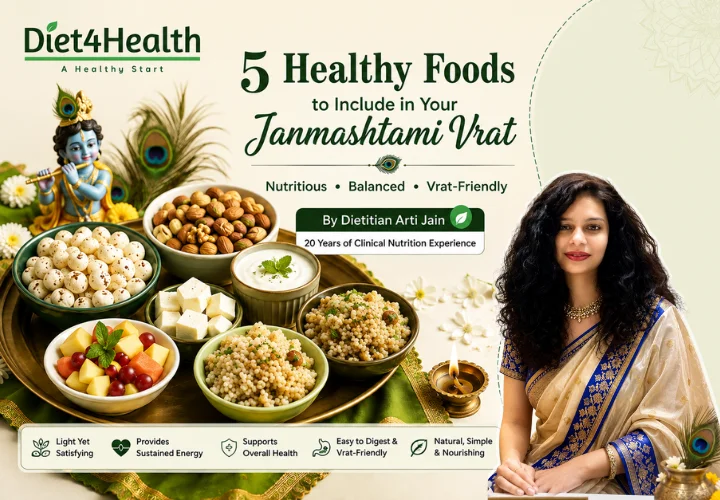
A well-planned vrat can be both traditional and nutritious. Here are five healthy food groups you can include during your Janmashtami fast.
1. 🌿 Makhana – A Light & Smart Snack
Makhana (fox nuts) is one of the most versatile vrat-friendly foods. It is light, easy to prepare and can be roasted instead of fried.
Try dry-roasted makhana with a small amount of ghee and mild spices. It makes a convenient snack between meals and can help prevent unnecessary cravings for fried vrat snacks.
Tip: Keep the portion moderate rather than eating directly from a large bowl.

2. 🥜 Nuts & Seeds – For Sustained Energy
Almonds, walnuts, pistachios and other nuts can provide healthy fats, protein and important micronutrients.
Instead of consuming large quantities at once, have a small portion of mixed nuts as a snack. Soaking almonds overnight is optional—it does not make them nutritionally essential, but some people find them easier to eat.
Tip: Choose unsalted and preferably minimally processed nuts.
3. 🥛 Dairy – Add Protein to Your Vrat
Milk, curd, buttermilk and paneer can be useful additions to a balanced vrat meal, depending on your individual dietary preferences and tolerance.
Curd or buttermilk can be particularly refreshing, while paneer can help add protein to a meal.
Tip: Prefer plain curd or homemade preparations over heavily sweetened dairy products.
4. 🍎 Fruits – Nature’s Convenient Choice
Fruits are an easy way to add fibre, vitamins, minerals and natural sweetness to your fasting routine.
Choose seasonal fruits such as apple, guava, orange, papaya, pear or berries. Whole fruits are generally a better choice than juices because they provide fibre and are more filling.
Tip: Avoid turning fruit into a dessert loaded with sugar, honey or sweetened cream.
5. 🌾 Suitable Vrat Grains – Choose Wisely
Depending on your fasting tradition, kuttu (buckwheat), rajgira (amaranth) and sama rice may be suitable choices.
The healthier approach is to focus on preparation. A kuttu roti or sama rice meal with curd and vegetables can be more balanced than deep-fried puris or pakoras.
Tip: Prefer steamed, roasted, grilled or lightly cooked preparations over deep-fried vrat foods.
Make Your Janmashtami Vrat Healthier
Remember, fasting does not mean feasting on fried foods! Your vrat can include variety, portion control, hydration and balanced food choices.
If you have diabetes, kidney disease, are pregnant, take regular medication, or have another medical condition, fasting may require individual guidance and should not be planned without consulting your healthcare professional.
This Janmashtami, celebrate devotion while also respecting your health. A healthy body supports a healthy lifestyle.
Wishing you and your family a blessed, healthy and joyful Janmashtami!
— Dietitian Arti Jain
20 Years of Clinical Nutrition Experience
Diet4Health | Clinical Nutrition & Lifestyle Management