
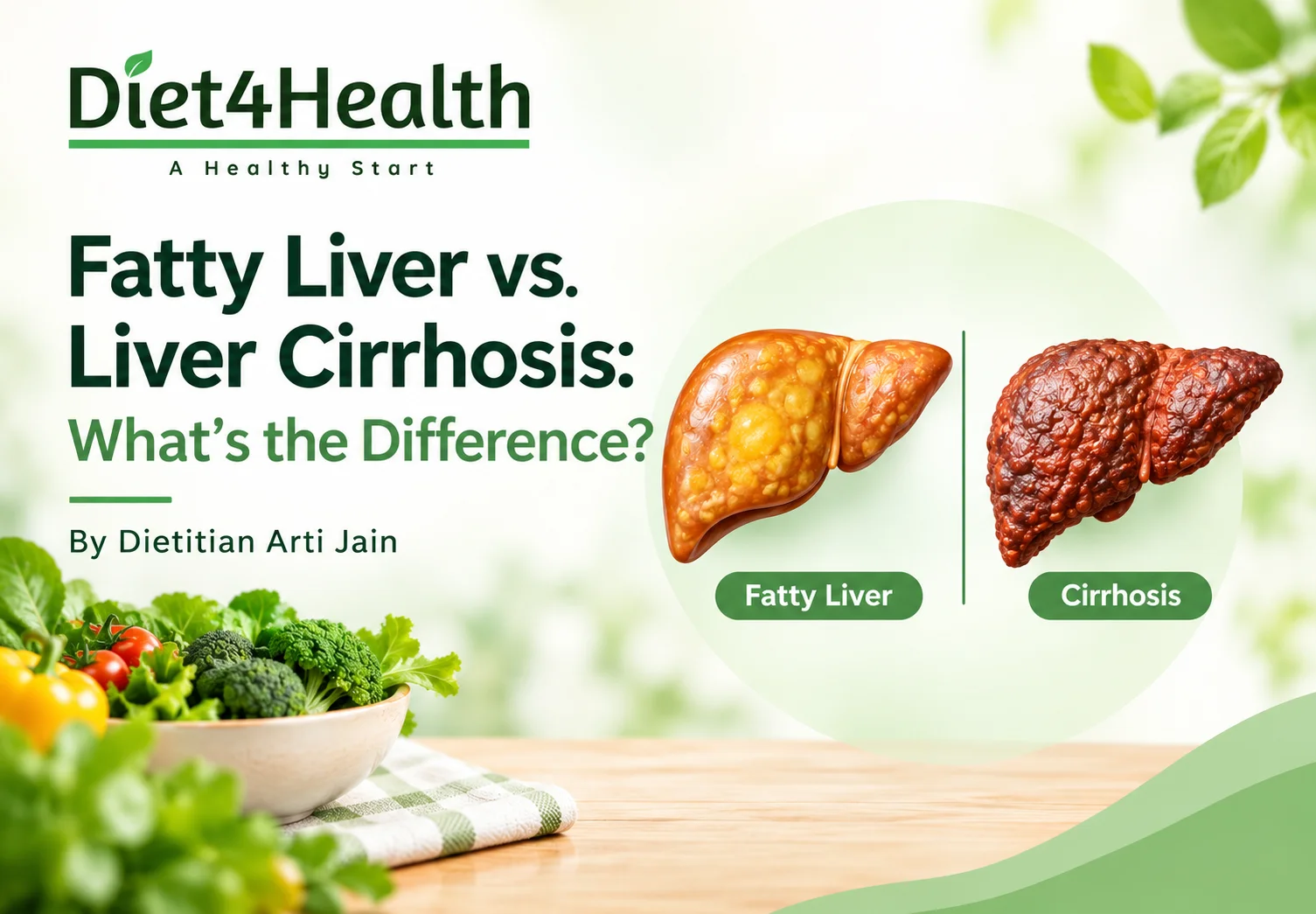
By Dietitian Arti Jain | Diet4Health
The liver performs hundreds of important functions every day, including processing nutrients, supporting digestion, storing energy and helping the body process medicines and other substances. Because of this, maintaining liver health is an important part of overall wellness.
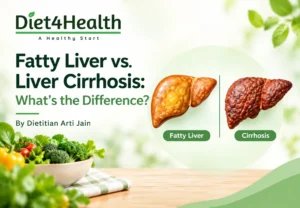
Two terms that are often confused are fatty liver and liver cirrhosis. Although they are both related to liver health, they are not the same condition. Fatty liver can sometimes improve with appropriate lifestyle changes, while cirrhosis involves significant and often permanent scarring of the liver.
Understanding the difference can help you take the right steps at the right time.
What Is Fatty Liver?
Fatty liver, medically known as hepatic steatosis, occurs when excess fat accumulates inside the liver.
A common type is Metabolic Dysfunction-Associated Steatotic Liver Disease (MASLD), which is associated with metabolic factors such as excess body weight, insulin resistance, type 2 diabetes, abnormal cholesterol or triglyceride levels and other metabolic health concerns. Alcohol can also contribute to a different form of fatty liver disease.
Fatty liver may not cause obvious symptoms. Many people discover it during a routine health check-up, blood tests or an abdominal ultrasound.
Fatty liver and cirrhosis are different stages of liver disease, and having one does not automatically mean you have the other.
In many people, improving diet quality, physical activity, body composition and metabolic health can help reduce liver fat and lower the risk of progression.
What Is Liver Cirrhosis?
Liver cirrhosis is a more advanced form of liver damage in which repeated or long-term injury causes scar tissue to replace healthy liver tissue.
As scarring progresses, the liver may become less capable of performing its normal functions. Cirrhosis can develop due to several causes, including chronic viral hepatitis, long-term alcohol-related liver disease, metabolic liver disease and certain autoimmune or inherited liver conditions.
Unlike simple liver fat accumulation, established cirrhosis represents structural damage and requires appropriate medical evaluation and ongoing management.
Fatty Liver vs. Cirrhosis: Key Differences
| Fatty Liver | Liver Cirrhosis |
|---|---|
| Excess fat accumulates in the liver | Significant scar tissue develops in the liver |
| May have few or no symptoms | Symptoms may develop as liver function becomes affected |
| Can sometimes improve with lifestyle and medical management | Established scarring generally cannot simply be reversed |
| May remain stable or progress depending on the cause and risk factors | Represents advanced chronic liver damage |
| Usually identified through medical evaluation and imaging/laboratory tests | May require blood tests, imaging and sometimes specialised assessment |
Can Fatty Liver Become Cirrhosis?
It can, but not everyone with fatty liver develops cirrhosis.
For some individuals, fatty liver may remain relatively stable. In others, ongoing inflammation and liver injury can lead to fibrosis, which means increasing scar tissue. Advanced fibrosis can eventually progress to cirrhosis.
The risk can be influenced by factors such as diabetes, obesity, metabolic health, alcohol consumption, genetics, the underlying cause of liver disease and the degree of liver fibrosis.
This is why identifying fatty liver early can be valuable.
Are Fatty Liver and Cirrhosis Symptoms Different?
Both conditions can sometimes exist without noticeable symptoms, particularly during earlier stages.
Possible symptoms of more advanced liver disease can include persistent fatigue, loss of appetite, nausea, swelling in the legs or abdomen, jaundice, easy bruising or other changes associated with impaired liver function.
However, symptoms alone cannot determine whether someone has fatty liver, fibrosis or cirrhosis.
A diagnosis should be based on appropriate medical evaluation rather than symptoms alone.
Can Diet Help Fatty Liver?
Nutrition plays an important role in managing metabolic liver health.
A personalised approach may focus on:
- Improving overall food quality and meal balance
- Managing excessive calorie intake where appropriate
- Increasing fibre-rich foods
- Choosing appropriate sources of protein
- Reducing excess added sugar and highly processed foods
- Managing portion sizes
- Supporting healthy weight and metabolic health
- Limiting or avoiding alcohol when medically advised
- Maintaining regular physical activity
There is no single “fatty liver food” or miracle diet that works for everyone. The appropriate dietary approach depends on the person’s health profile, lifestyle, medications, laboratory findings and other medical conditions.
What About Grade 1, Grade 2 and Grade 3 Fatty Liver?
Ultrasound reports may describe fatty liver as Grade 1, Grade 2 or Grade 3, based on the degree of fat-related changes seen on imaging.
However, the ultrasound grade alone does not tell the complete story. It does not necessarily determine the amount of fibrosis or confirm whether cirrhosis is present.
If fatty liver is identified, your doctor may recommend additional evaluation based on your individual risk factors, blood tests and other findings.
When Should You Take Liver Health Seriously?
If you have been diagnosed with fatty liver, elevated liver enzymes, diabetes, obesity, abnormal cholesterol or other metabolic concerns, it is worth discussing your results with your doctor.
Do not wait for symptoms before paying attention to liver health. Early identification and appropriate lifestyle management may help reduce the risk of disease progression.
“Fatty Liver Does Not Automatically Mean Cirrhosis “
Fatty liver refers primarily to excess fat accumulation in the liver, while cirrhosis involves significant scarring and structural damage. Fatty liver does not automatically progress to cirrhosis, but persistent liver injury can increase the risk of fibrosis and advanced liver disease in some individuals.
The right approach is not to follow a generic “liver detox” or crash diet. Instead, understand the underlying cause, monitor your health appropriately and follow a personalised nutrition and lifestyle plan alongside medical guidance when required.
Healthy liver care starts with understanding your condition—not simply treating a report.
About Dietitian Arti Jain
Dietitian Arti Jain, Founder & Chief Nutritionist at Diet4Health, focuses on personalised clinical nutrition and sustainable dietary approaches for metabolic health and lifestyle-related concerns. Her approach combines individual health requirements, food habits, lifestyle and available medical information to create practical nutrition guidance suited to everyday Indian eating patterns.
This article is for general educational purposes and should not replace medical diagnosis or treatment. Individuals diagnosed with fatty liver, fibrosis or cirrhosis should consult qualified healthcare professional for appropriate evaluation and management.