
Chaitra Navratri fasting is not just a spiritual practice—it can also support detoxification and metabolic balance when done correctly. However, many people unknowingly make food choices that lead to fatigue, dehydration, or even weight gain.
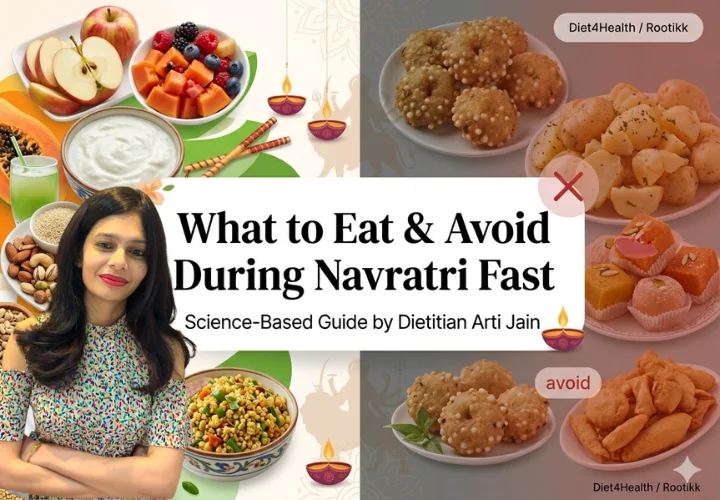
✅ What to Eat (Scientifically Beneficial)
Focus on low-glycemic, nutrient-dense foods to maintain stable energy levels. Include:
- Fruits like apple, papaya, and berries for natural sugars and antioxidants
- Dairy (curd, buttermilk, paneer) for protein and gut health
- Millets (like barnyard millet, amaranth) instead of sabudana for better fiber and blood sugar control
- Nuts & seeds (almonds, walnuts, chia) for healthy fats and satiety
- Hydration: coconut water, lemon water to maintain electrolyte balance
❌ What to Avoid
Many traditional fasting foods can spike blood sugar:
- Sabudana & fried snacks – high in carbs, low in nutrients
- Excess potatoes – can cause glucose fluctuations
- Sugary sweets & packaged vrat foods – lead to energy crashes
- Deep-fried items – slow digestion and increase calorie load
🧠 The Science Behind It
Balanced fasting helps regulate insulin levels, improves digestion, and may support fat loss. But poor choices can do the opposite.
👉 The key is smart fasting, not starving—choose foods that nourish your body while honoring tradition.